Teil 1 · Veröffentlicht am Freitag, 14. August 2026
Die letzten zehn Meter einer digitalen Lieferkette
Die Kraftstofflogistik hat Planung, Routen und Abrechnung digitalisiert. Dann kommt der Lkw an, und die wichtigsten zehn Meter der Lieferkette laufen vielerorts weiterhin über Papier, Gedächtnis und Telefon. Teil 1 von 5 über die Lücken zwischen leistungsfähigen Systemen und darüber, was sich ändern würde, wenn sie sich schließen.
Beitrag lesenBeitrag schließen
Der Punkt bleibt stehen
Ein Disponent verfolgt einen Tankwagen über die Karte. Die Route ist geplant, das Fahrzeug ist pünktlich, der Kunde erwartet die Ware. Auftragsdaten, Planungsdaten und Telematik haben ihre Arbeit getan.
Dann kommt der Punkt an, und der Bildschirm wird still.
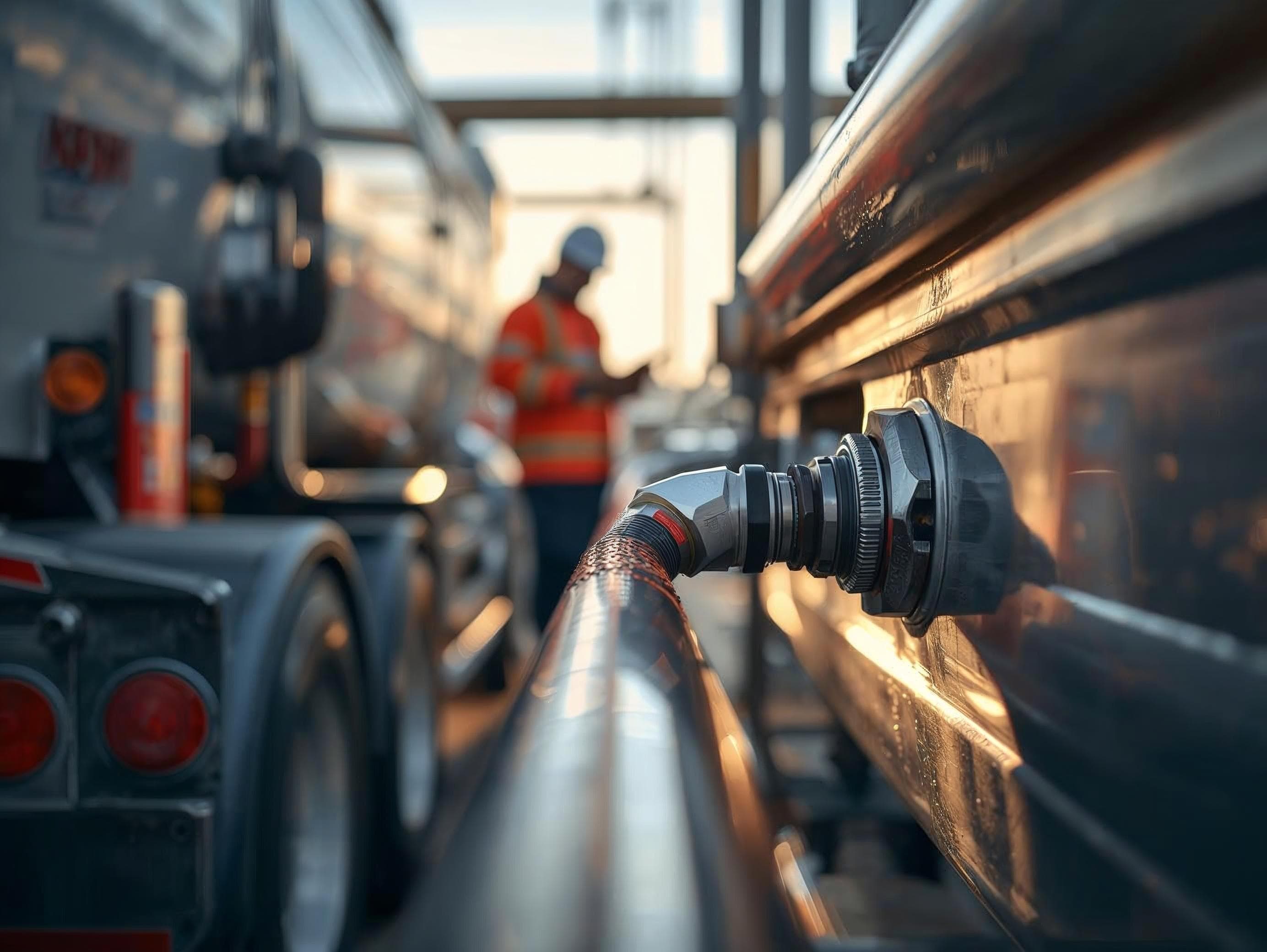
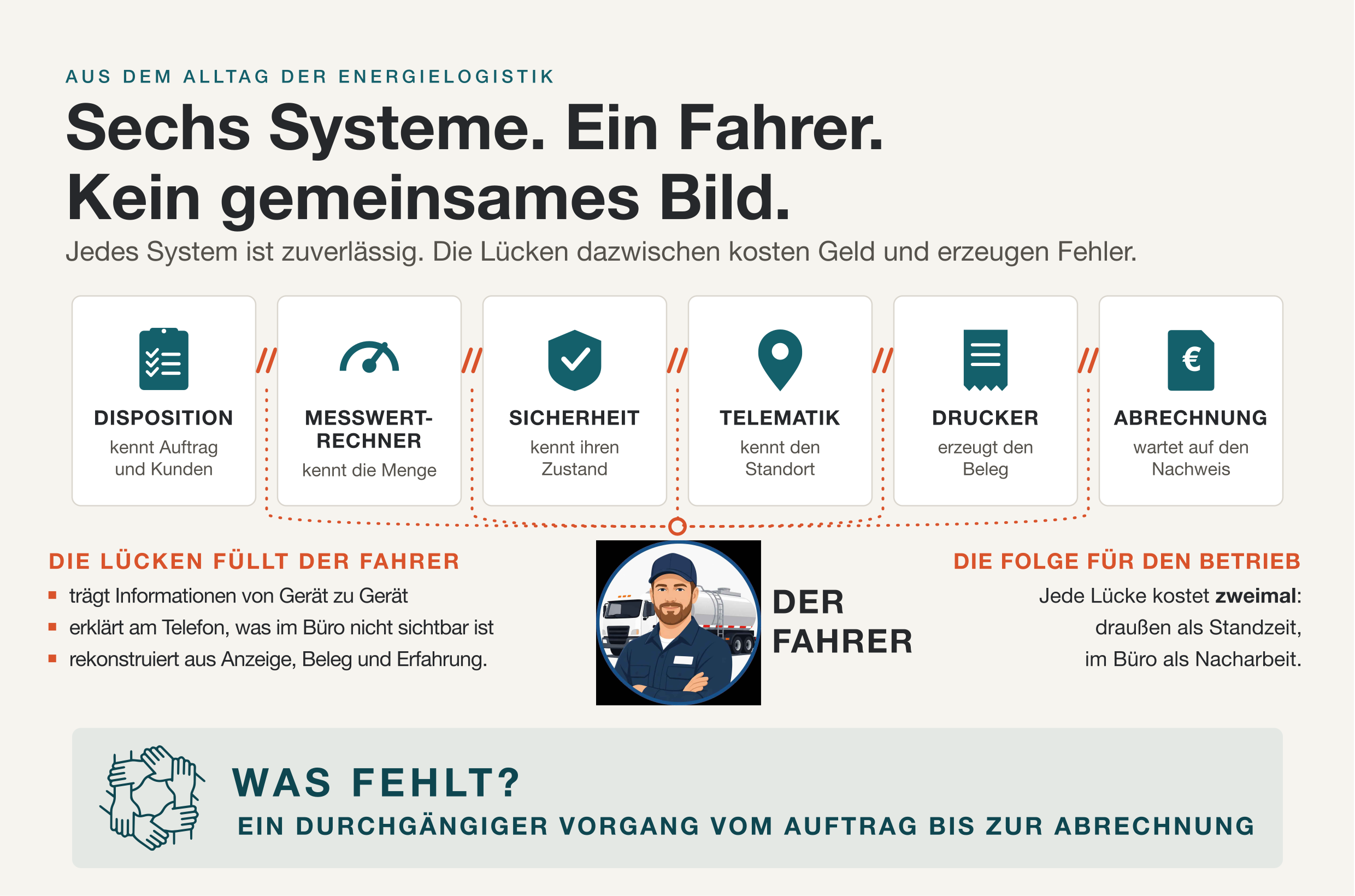
Was jetzt passiert, ist der Teil der Fahrt, der das Geld tatsächlich verdient. Der Schlauch wird angeschlossen. Der Zugang zum Tank wird geprüft. Produkt fließt. Eine Menge wird gemessen. Ein Beleg wird erstellt, eine Bestätigung eingeholt. In diesen Minuten treffen Produkt, Kunde und Nachweis endlich aufeinander, und in vielen Betrieben sind es zugleich die Minuten, die die wenigsten verwertbaren Spuren hinterlassen.
Der Weg zum Kunden ist heute oft nahezu lückenlos sichtbar. Die Lieferung selbst kann weiterhin davon abhängen, dass eine Person einen Bildschirm abliest, eine Zahl in ein anderes Gerät überträgt, eine Ausnahme am Telefon erklärt und einen Papierbeleg zurück in die Abrechnung trägt.
Das Problem ist keine schwache Komponente
Jeder einzelne Teil funktioniert in der Regel. Der Zähler misst. Das Fahrzeugsystem steuert. Der Fahrer kennt den Ablauf und hat ihn tausendfach durchgeführt. Die Bürosoftware erstellt Auftrag und Rechnung.
Die Schwachstelle liegt in der Übergabe zwischen leistungsfähigen Komponenten, und Übergaben sind niemandes Produkt. Kein Anbieter verkauft sie, keine Position im Angebot deckt sie ab, und kein einzelnes System hält fest, was sie kosten.
Deshalb sind „mehr Daten“ nicht automatisch eine Antwort. Ein modernes Fahrzeug kann sehr viele Daten erzeugen und den entscheidenden Lieferkontext trotzdem fragmentiert lassen. Es kommt nicht auf die Menge an, sondern darauf, ob Auftrag, Fahrzeug, Produkt, Messvorgang und Nachweis als ein zusammenhängender Ablauf erkennbar bleiben.
Klein an einer Abladestelle, strukturell im Netzwerk
Bei einer einzelnen Lieferung ist es trivial, einen Wert zu übertragen oder kurz anzurufen. Niemand eskaliert das. Niemand protokolliert es.
Wiederholt über jede Abladestelle, jede Tour und jede Arbeitswoche hören diese kleinen Brüche auf, Einzelfälle zu sein, und werden zum Betriebsmodell. Sie verbrauchen Fahrerzeit, doch die Kosten bleiben nicht beim Fahrer. Die Disposition wartet auf eine Antwort. Der Kundendienst erklärt eine Verzögerung. Die Verwaltung gleicht einen Beleg ab. Der Service versucht herauszufinden, ob eine Unterbrechung an Prozess, Technik oder fehlender Information lag.
Die größten Verluste einer digitalen Lieferkette stecken meist genau in diesen alltäglichen Übergängen, und sie sind gerade deshalb so schwer zu sehen, weil kein einzelnes System sie verantwortet.
Durchgängigkeit muss bis zur Abgabestelle reichen
Ein vernetzter Prozess bedeutet nicht, dass jede Funktion von einer permanenten Netzverbindung abhängt. Lokale Bedienbarkeit bleibt am Fahrzeug unverzichtbar. Konnektivität soll Kontext erhalten, Synchronisation unterstützen und die richtige Information zu den richtigen Personen bringen, ohne die physische Lieferung von idealem Empfang abhängig zu machen.
Es bedeutet auch nicht, alles zu ersetzen, was heute funktioniert. Die meisten Flotten fahren gemischte Fahrzeuggenerationen mit Ausrüstung mehrerer Hersteller, die meisten Standorte ebenso. Durchgängigkeit muss beim Bestand beginnen, nicht bei der Annahme einer neuen Flotte und eines neuen Standorts.
Die nützliche Frage lautet deshalb nicht: „Wie digital ist unsere Logistikkette?“ Sie ist konkreter und unbequemer:
Bleibt die Lieferung vom Auftrag bis zum Nachweis ein Prozess, oder zerfällt sie auf den letzten zehn Metern in unverbundene Momente?
Was das aus Ihrer Perspektive bedeutet
- Flottenbetreiber und Distributeure: Auf den letzten zehn Metern entscheidet sich Ihre Marge, und dort entstehen Ihre Reklamationen. Zugleich ist dieser Abschnitt meist der am wenigsten instrumentierte Teil der Tour.
- Standort- und Netzbetreiber: Sie erben die Folgen von Entscheidungen, die in fremden Fahrzeugen und fremder Software getroffen wurden. Teil 3 kommt darauf zurück.
- Fahrzeugbauer und Integratoren: Die Übergabe wird gestaltet, oder sie wird vererbt. Neutral ist sie selten.
- Serviceorganisationen: Jede Kontextlücke wird später zu einem Diagnoseanruf.
Die Antwort sehen Sie in Kassel
In den kommenden Wochen betrachtet diese Serie vier dieser operativen Lücken: die letzten zehn Meter, den Papierkram, der nach der Lieferung offen bleibt, die Integrationsentscheidungen, die ein Standort erbt, ohne sie je getroffen zu haben, und die Kosten, die weiterlaufen, wenn ein System steht.
Secu-Tech zeigt seine Antwort auf der ETX in Kassel, 17. bis 19. September 2026.