EN 14116
Digital interface for product recognition devices for liquid fuels
Defines the digital interface at the loading and discharge coupling for transferring product-related information and compatibility requirements.
Standards-based product recognition for fuel distribution
Reduce the risk of cross-contamination by verifying product information at the loading and discharge interface. The system supports the digital interface defined for product recognition in fuel logistics and can be integrated with overfill prevention workflows.
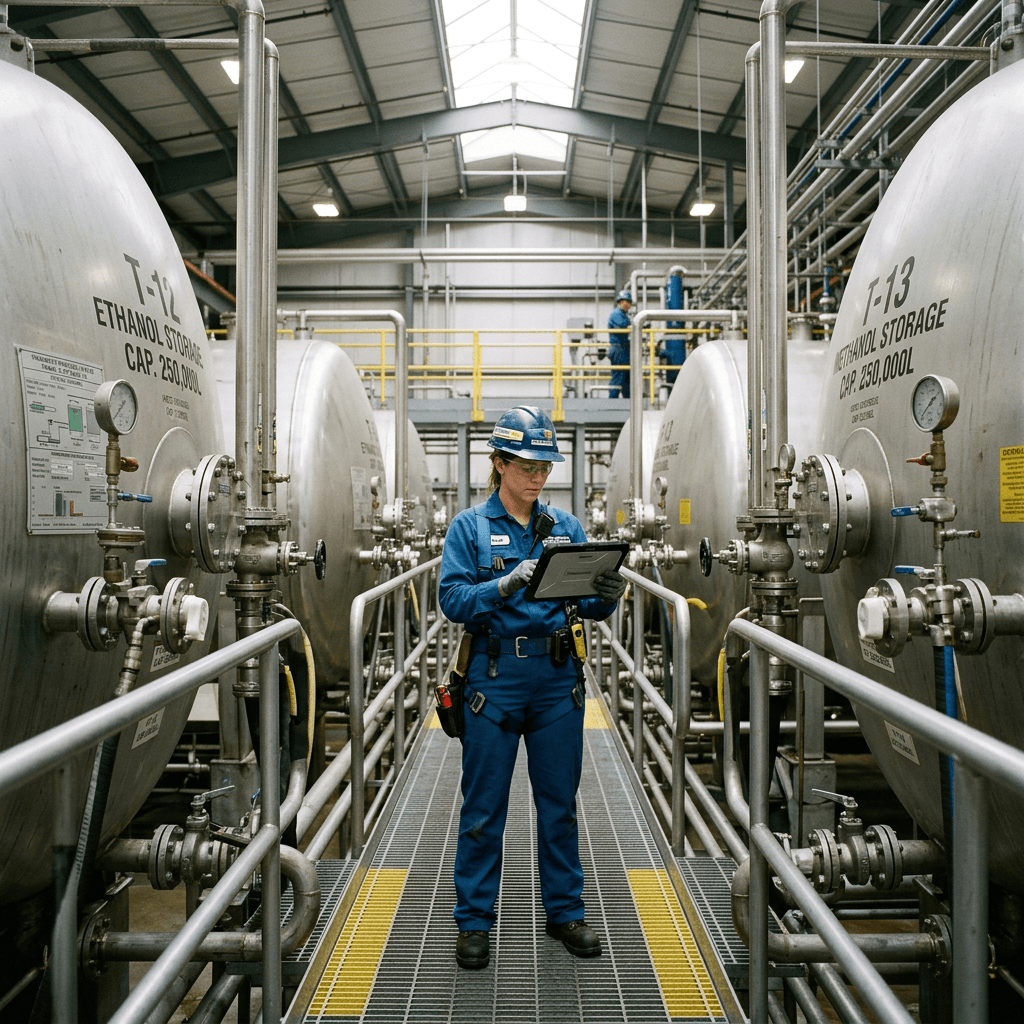
Validation happens at the interface where product is transferred, not only in paperwork.
Supports the digital product recognition interface used at loading and discharge couplings in fuel logistics.
Provides traceable records of connection, verification, and blocked transfers, depending on configuration.
Even with experienced drivers and clear procedures, busy sites, parallel hoses, and similar-looking couplings create room for error. Once product is in the wrong tank, the operational and environmental consequences escalate quickly.
Public case studies highlight that cross-drop incidents can require tank cleaning, product disposal, and downtime. The real impact depends on tank size, product type, and local environmental rules.
Instead of relying only on visual checks, the delivery process gets an additional technical control at the coupling. If product information does not match the configured tank acceptance rules, the system can prevent the transfer and provide an operator message.
Product codes are verified at the coupling before the transfer starts, preventing cross-contamination at the point of delivery.
Configure allowed products per tank or compartment and align codes across depot, fleet, and station interfaces.
At loading or discharge, the digital interface exchanges product related information and checks it against the configured rules.
If the combination is valid, the process continues. If not, the system signals a block and supports a controlled stop before contamination occurs.
Store verification results and events, depending on configuration, to support audits and post-incident analysis.
EN 14116
Defines the digital interface at the loading and discharge coupling for transferring product-related information and compatibility requirements.
EN 13616
Often used together with product recognition as part of a controlled delivery process.
ATEX
Depending on configuration and zone, components are available with appropriate hazardous-area certification.
Truck-side platform that can combine overfill prevention and product recognition functions depending on configuration.
Station-side product identification interface to support coupling-level verification and compatibility with EN 14116 workflows.
Test tool for verifying product recognition and interface behavior during commissioning and service.
OPW CIVACON case study referencing cleanup cost magnitude for a cross-drop scenario.
CHOICE reporting on vehicle repairs after contaminated fuel incidents.
CHOICE notes that severe cases can reach tens of thousands of dollars.
“When product codes and interfaces are standardised across the network, the delivery process becomes easier to audit and less dependent on local workarounds.”
We analyse loading racks, fleet procedures, and customer tank infrastructure to prioritise the right safeguards.
