EN 13616
Overfill prevention devices for static tanks for liquid fuels
Requirements and assessment methods for overfill prevention devices used with non-pressurised static fuel tanks.
Overfill protection for stations, depots, and mobile tanks
Overfill protection that fits everyday fuel logistics. Certified components, clear operator feedback, and a safety chain designed for filling stations, depots, and mobile tank systems.
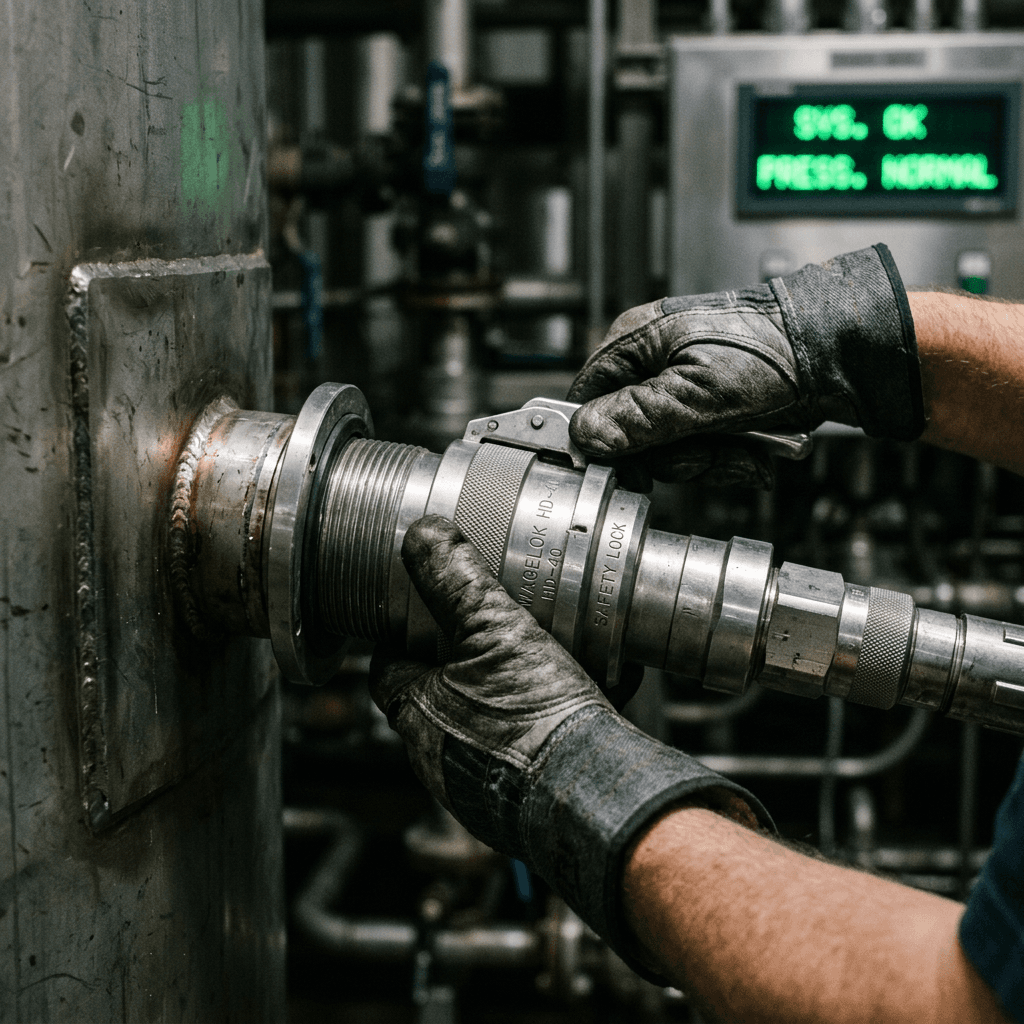
The permissive chain is continuously monitored. If the signal chain breaks, the system transitions to a safe state.
Selected system components are available in ATEX-certified variants for operation in hazardous areas.
Implementations can support deliveries to multiple tanks with clear status feedback per channel.
Overfills are rarely one single mistake. They are usually a chain of small issues: missing tank data on site, unclear hose routing, parallel unloading, time pressure, and limited visibility in hazardous areas.
Spills can trigger clean-up, downtime, and liability. Public case studies and regulator reports show that costs can scale from thousands per spill to very large losses in major incidents. Actual impact depends on location, product, and response time.
The operator gets a clear permissive status before pumping, continuous monitoring during unloading, and a defined shutoff on limit reach or fault. The result is a repeatable process that reduces reliance on ad-hoc judgement.
A certified safety chain from probe to shutoff valve ensures reliable overfill prevention in three steps.
Connect the tank overfill probe interface (cable or radio system depending on configuration) and confirm readiness on the receiver or display unit.
Before product transfer, the system verifies the signal chain. Only a valid chain enables the transfer process.
During unloading, the level limit and signal integrity are monitored. Faults, disconnects, or radio loss are treated as unsafe conditions.
If the level limit is reached or the safety chain fails, the system triggers a controlled stop of the transfer and shows the status for the operator.
EN 13616
Requirements and assessment methods for overfill prevention devices used with non-pressurised static fuel tanks.
EN 13922
Minimum requirements for overfill prevention systems on tank vehicles for liquid fuels.
ATEX
Depending on configuration and zone, components are available with appropriate hazardous-area certification.
UK Major Incident Investigation Board reporting on the 2005 UK fuel depot incident.
Spill Center data cited by TruckingInfo, context is diesel spill incidents from trucks.
EPA study on leaking underground storage tank cleanup costs in selected US states.
“A defined safety chain helps standardise operations and makes it easier to demonstrate preventive controls during audits.”
Our engineering team maps your loading racks, marine berths, and truck gantries to deliver a tailored retrofit plan.
