The story
How tanker operations are changing
Until now
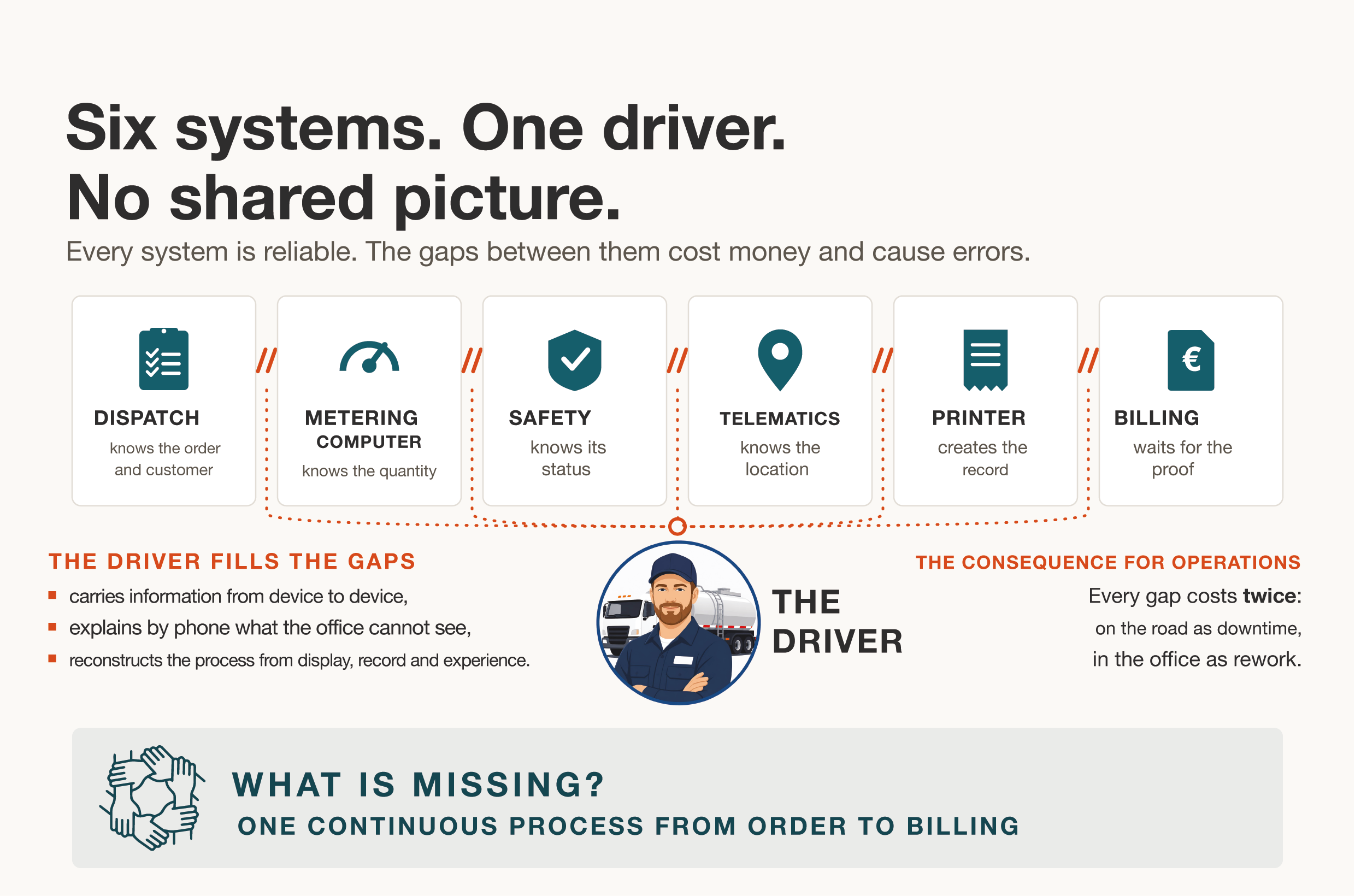
Six systems. One driver. No shared picture.
Dispatch, metering computer, safety equipment, telematics, printer and billing are each reliable. None knows the whole process. The driver fills the gaps: carrying information from device to device, explaining on the phone what the office cannot see, reconstructing from display, ticket and experience.
Missing information can delay deliveries and create extra work in the office.
On the vehicle
An architecture that grows with the vehicle
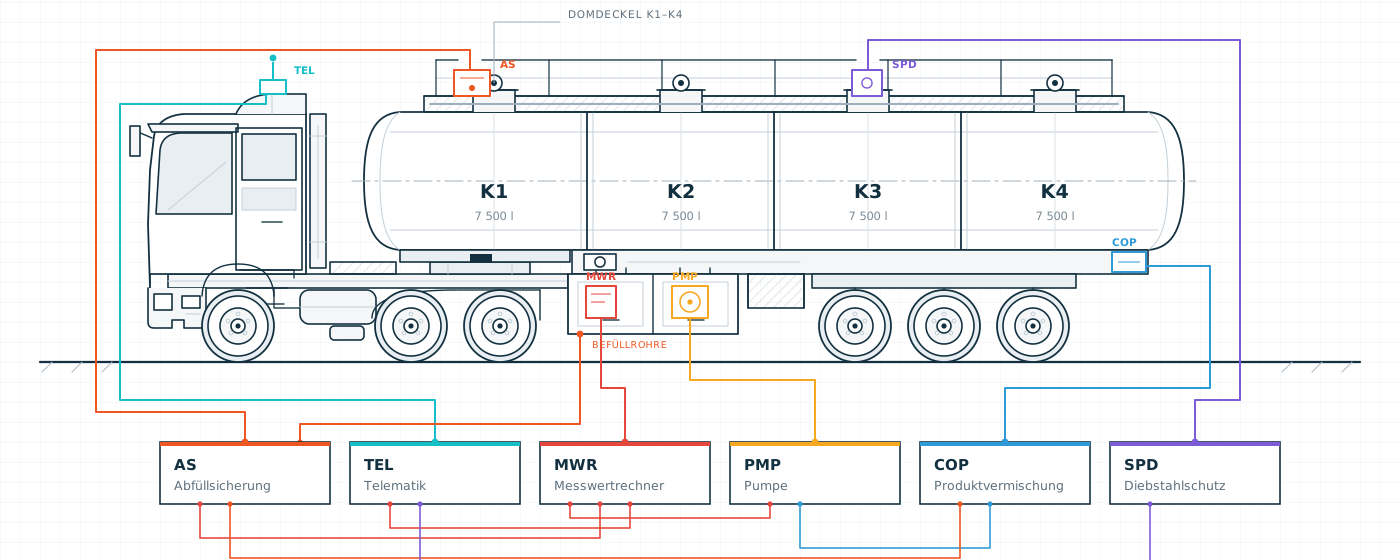
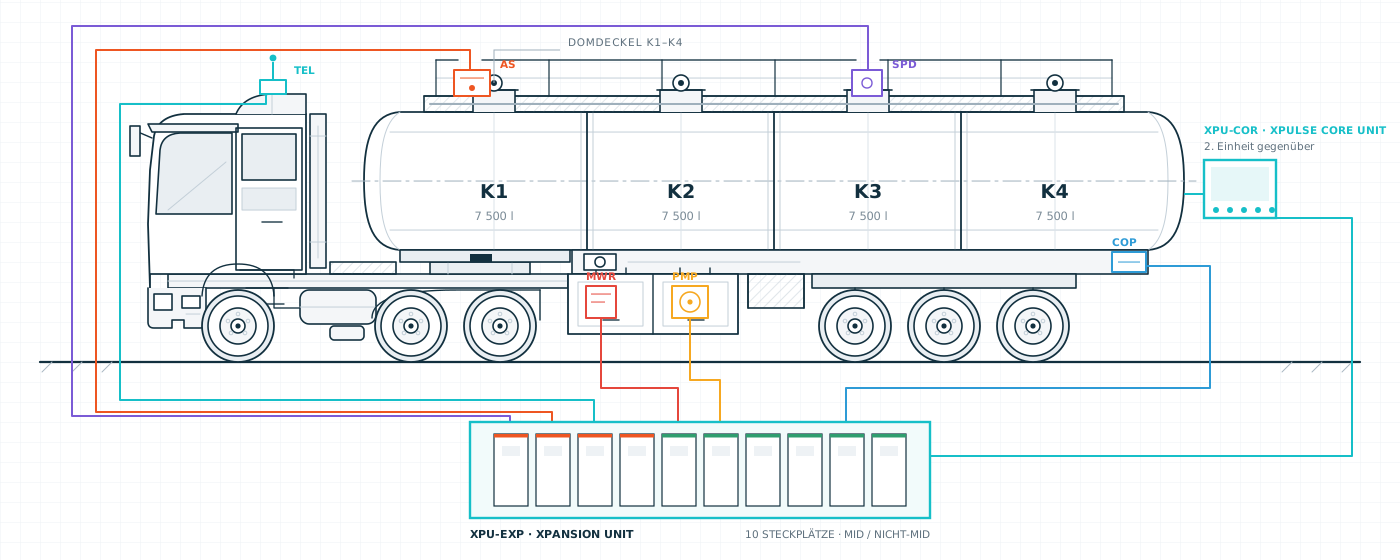
A modular architecture allows the platform to grow with the vehicle: an operating unit combines computing and operation, expansion units accept plug-in function modules, bringing additional tasks into the platform. Existing meters and sensors remain usable, with each combination assessed for technical and regulatory compatibility. This gives fleets a route to modernise vehicles as their needs change.
An expansion unit accepts up to ten plug-in modules, with further units extending the system. One cable connects the operating unit to an expansion unit, and another connects the next unit. Power supplies and field-device connections remain part of each vehicle installation. Configurations can be saved and reloaded.
For vehicle builders and fleet operators, the value is staged expansion: from the operating unit alone to one expansion unit, then several. Existing meters, sensors and actuators can be incorporated, and each combination is checked for technical and regulatory suitability. Existing Secu-Tech safety systems continue to operate independently.
Safety and environmental protection
Errors at the transfer point can lead to spills
Errors at a transfer point can lead to a wrong-product delivery, contamination or a spill. Which compartment contains which product? Is discharge permitted? When does it have to stop? XPULSE brings metering, safety functions and operation into one guided workflow. When a fault occurs, it shows the driver its cause, effect and the next safe step, and records connect quantity, compartment, interlock and delivery-note information to the operation.
Protection functions join the platform in stages: the roadmap begins with flow metering on tankers, followed by wireless overfill protection, legal-for-trade level monitoring, product-mix protection and theft protection. Existing Secu-Tech safety systems continue to operate independently. Error prevention instead of error logging.
Accidents involving water-hazardous substances: Germany, 2025
- 1,461
- accidents involving water-hazardous substances
- 5.9 million
- litres released
- 2.4 million
- litres not recovered
Source: Federal Statistical Office (Destatis), press release No. 302 of 24 August 2026, reporting year 2025. The figures cover accidents during the handling and transport of water-hazardous substances in Germany.
BAuA: after twelve hours of work the accident rate roughly doubles compared with eight hours.
The driver
Designed for experienced and new drivers
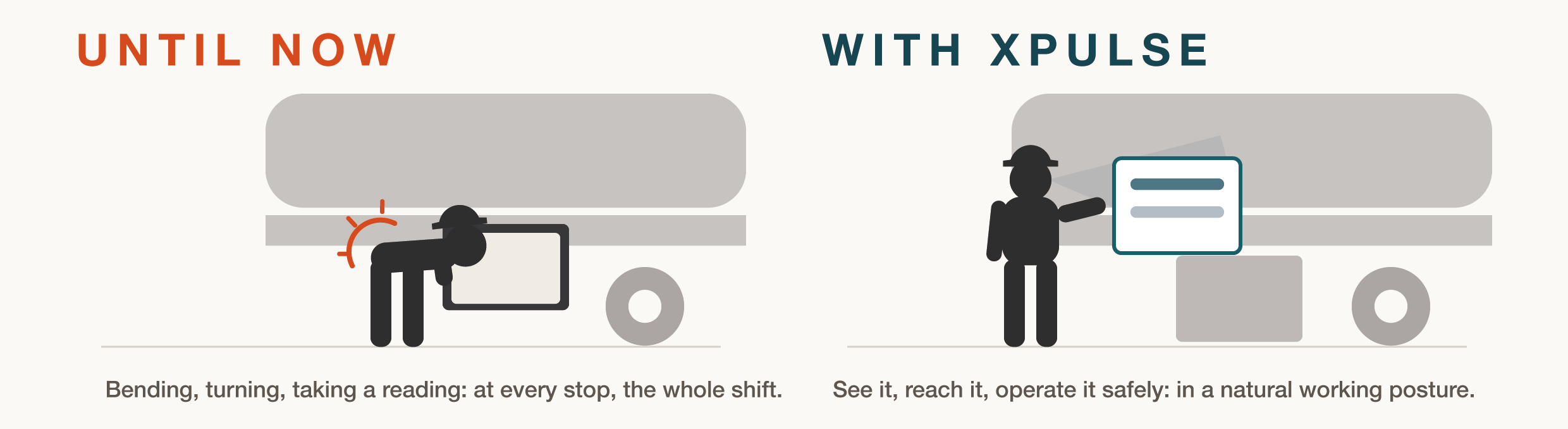
Long shifts, gloves, glare and darkness make work at the tanker more demanding. The interface also needs to support drivers who are new to the system, especially when a fault occurs.
XPULSE is designed for these conditions: operation in a natural working posture, one active selection and one clear next step, critical states not coded by colour alone, the same operation in every stage.
Beyond fuel
Developed in Austria for liquid logistics
XPULSE starts where Secu-Tech has more than twenty years of experience: tank-truck fleets, heating-oil and fuel distribution, service-station supply, depots and terminals. The platform is built for other liquids that are metered, safeguarded and delivered with proof.
Press resources for XPULSE
The press room contains press releases, images, diagrams, interface screenshots and an animation, along with facts and figures and the Solutions Guide.
Go to the press material