XPULSE · The modular system platform for the whole tanker
One system for the whole tanker.
XPULSE is more than a metering computer. The modular system platform brings together metering, safety functions, operation and communication on the tanker. It can be configured for the vehicle and expanded in stages.
World premiere at ETX, 17 to 19 September 2026
- Modular
- Configure for today. Extend for what comes next.
- Operator-centred
- Designed for gloves, time pressure, night operation and long shifts.
- Open
- Intended for supported existing metering installations and third-party systems.
A platform, not a fixed-function device
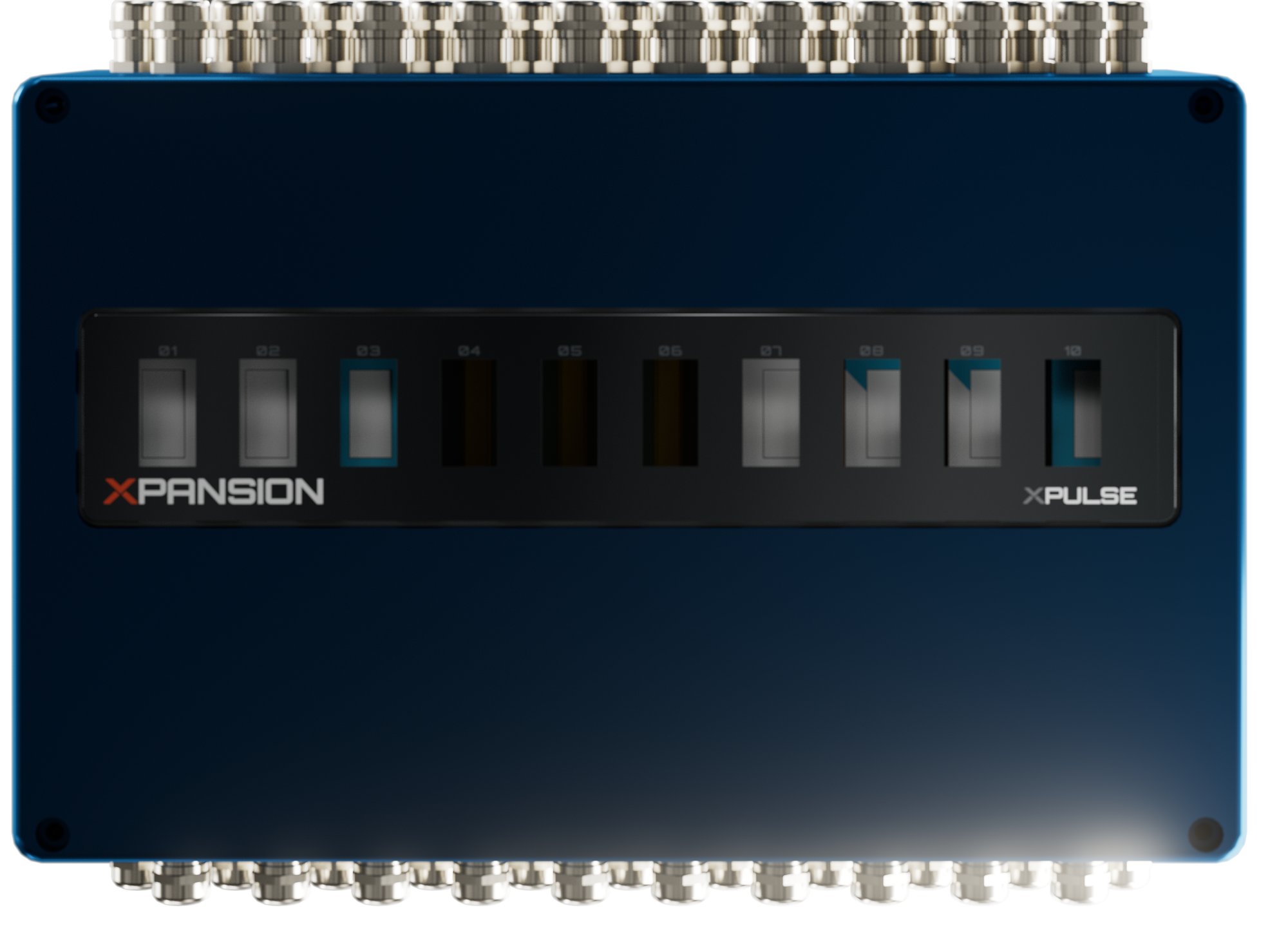
One Core Unit. Expandable through XPANSION Units.
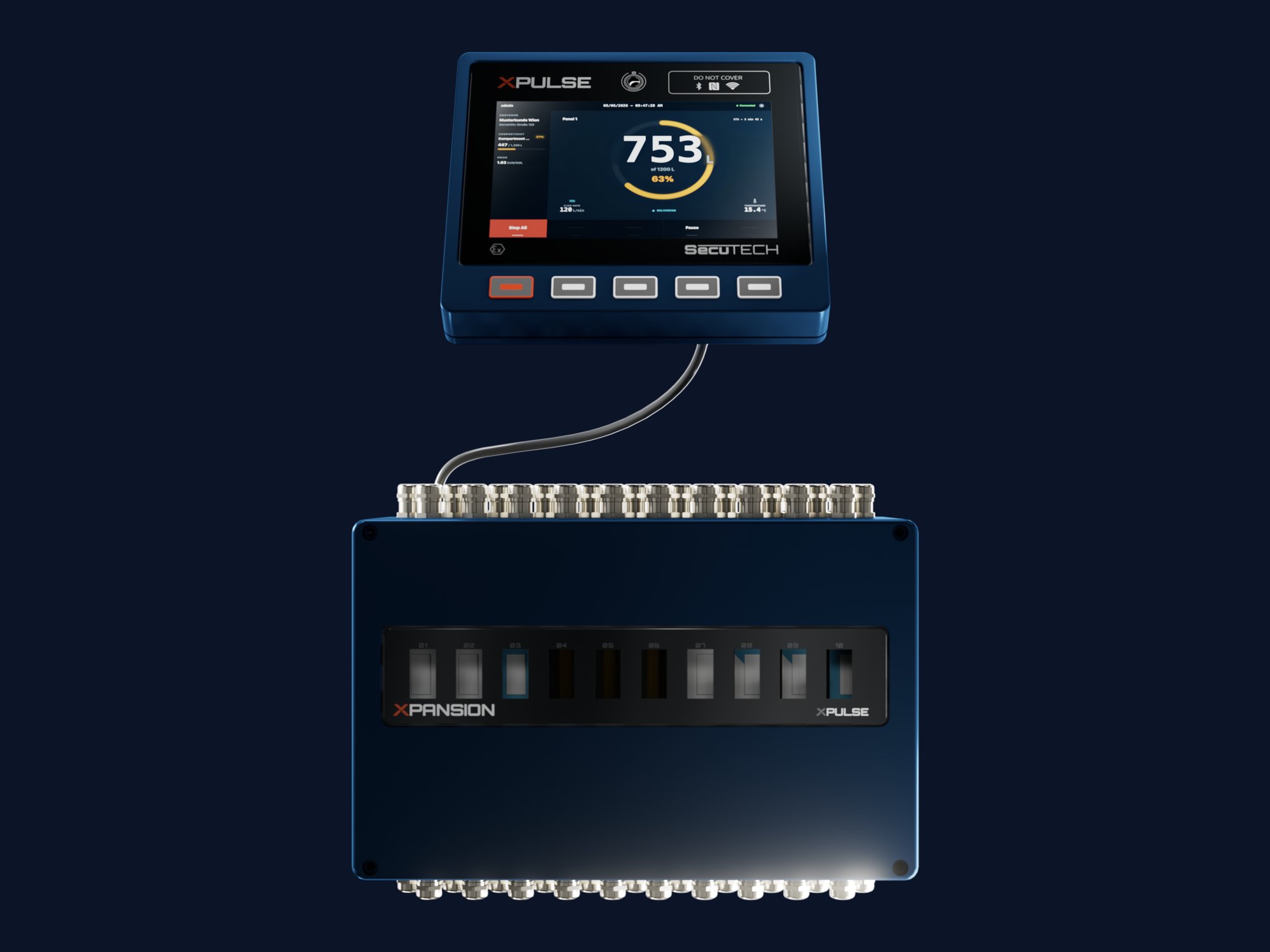
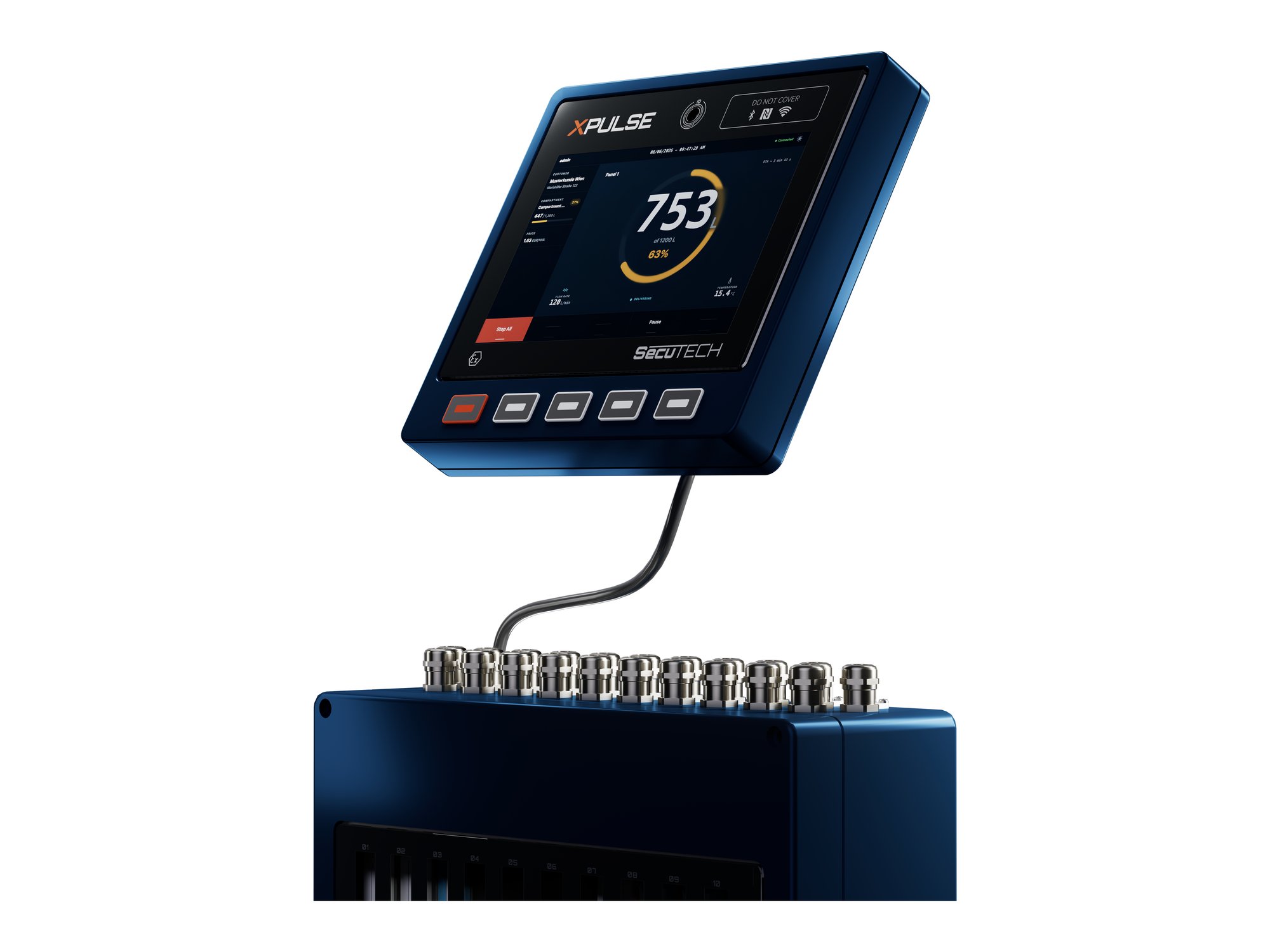
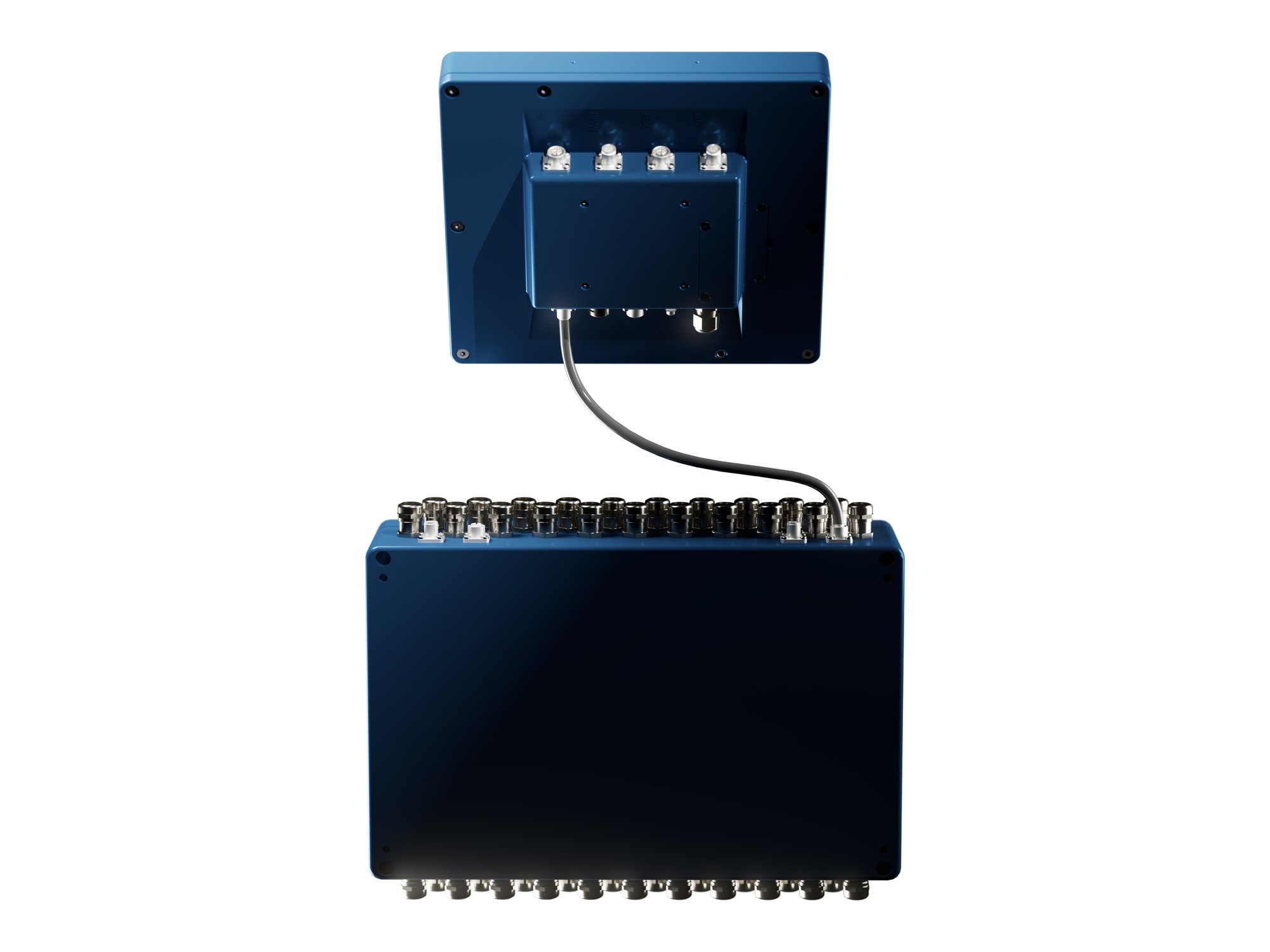
Every XPULSE configuration includes a Core Unit. It provides computing, central control and the operator interface on the vehicle.
XPANSION Units accept plug-in modules for the functions required by a particular vehicle, metering installation or process. Additional XPANSION Units support more complex configurations. The LTE-GPS Unit, a roof antenna with an integrated LTE and GPS module, connects the system to the internet and cloud via eSIM and provides the position via GPS/GNSS.
The result is a platform configured around the job rather than an oversized standard device. Functions can later be added or updated where technically and legally compatible without replacing the entire platform.
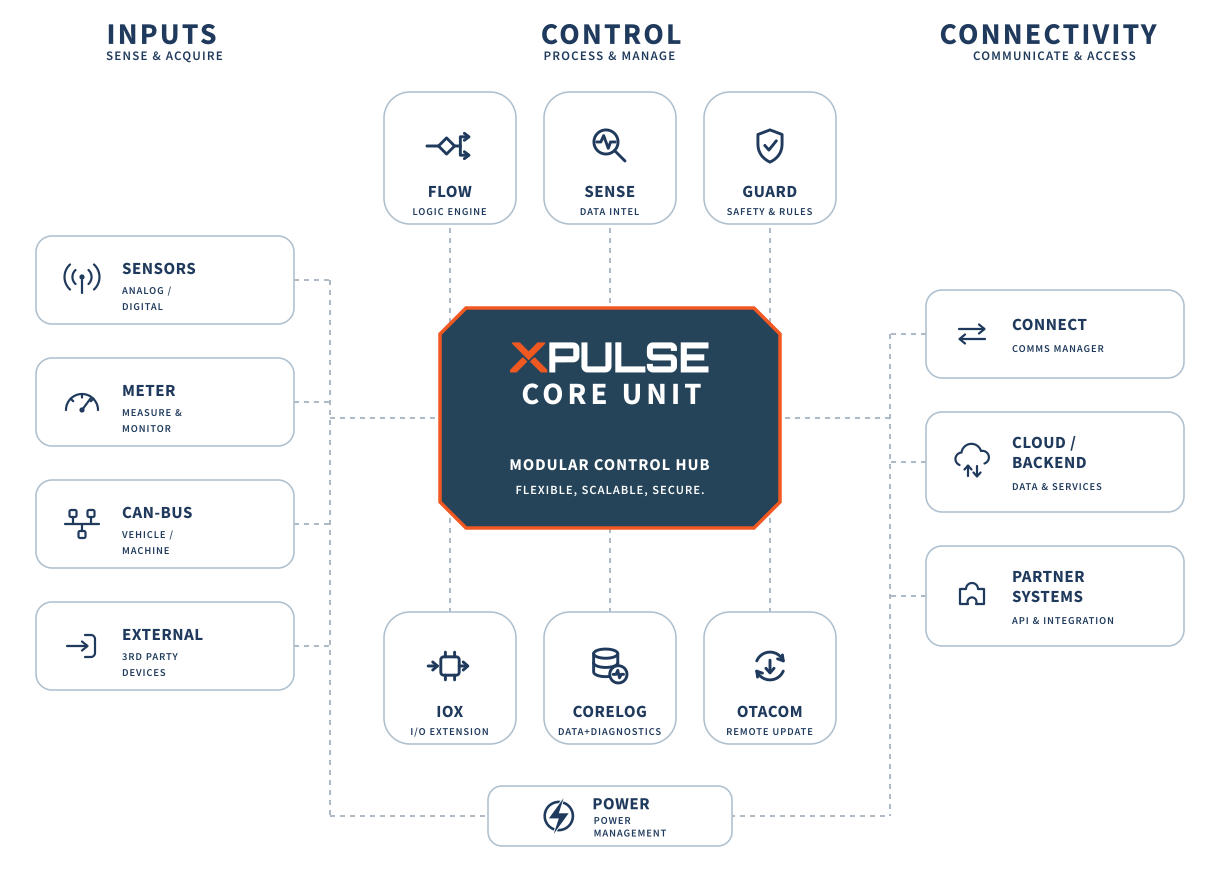
- Core Unit (XPU-COR)
- computing, operator terminal, configuration and central control
- XPANSION Unit (XPU-EXP)
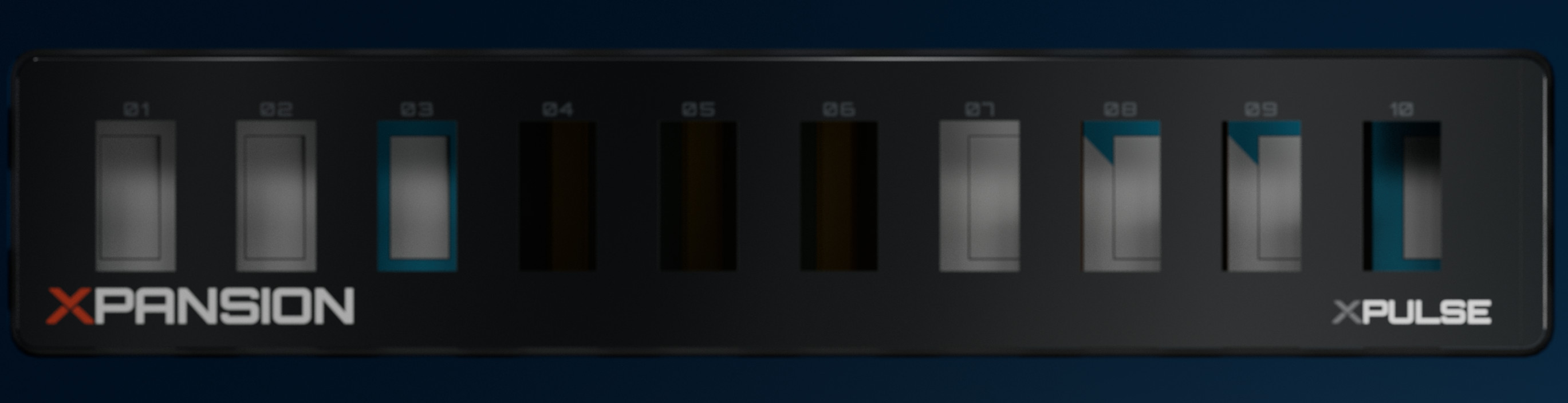
- housing, power supply and connections for up to ten plug-in modules, sealable MID area
- LTE-GPS Unit (XPU-LTE)
- roof antenna with LTE and GPS module, eSIM, connection to the internet and cloud
- Plug-in modules
- Power Module (XPM-POW), Dispense Control Module (XPM-DCO), Meter Module (XPM-MET), Digital Input Module (XPM-INP), Digital Output Module (XPM-OUT), Interface Module (XPM-IFA); in preparation: ValveBox, bus modules, analog modules, power backup, power management unit
- External systems
- supported metering installations, sensors, actuators, vehicle and business systems
Designed around the driver’s working day
Clear controls in demanding working conditions
Drivers work with gloves, under time pressure, in changing light and across long shifts. XPULSE is designed for these conditions.
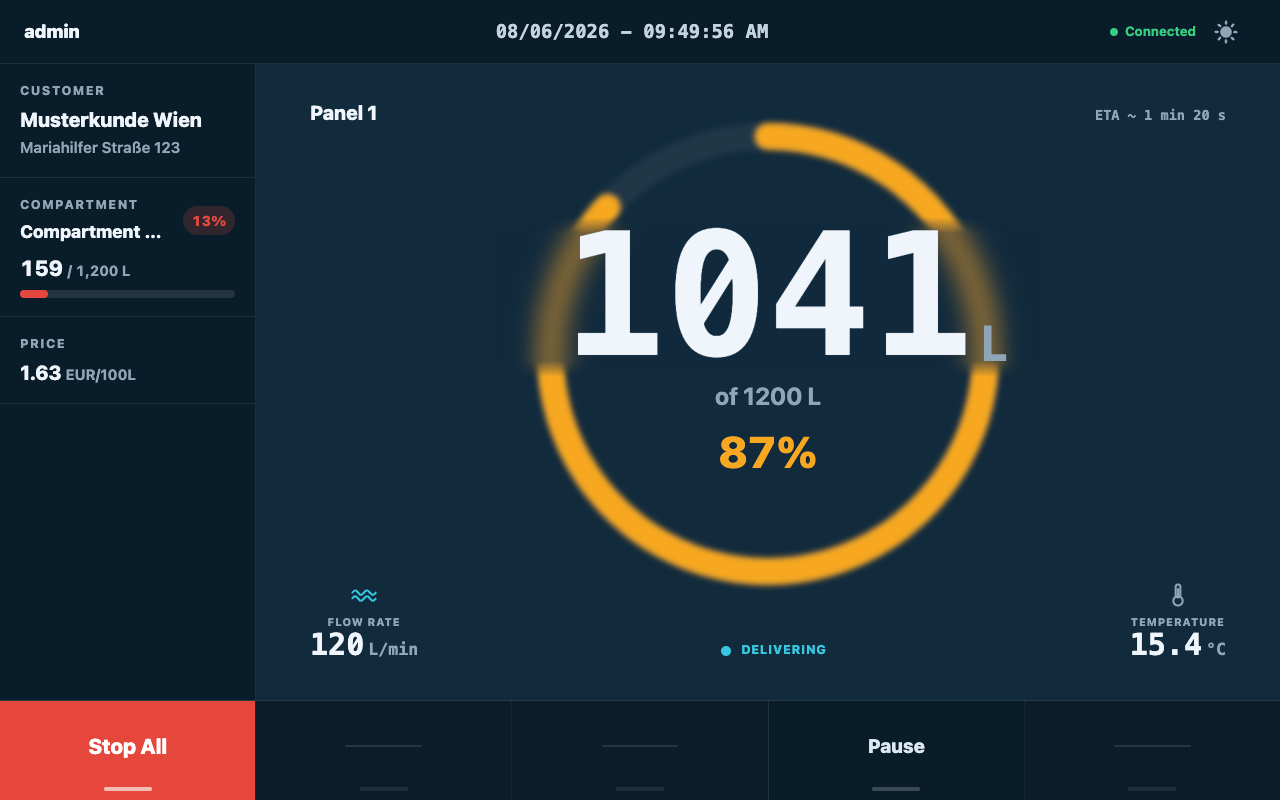
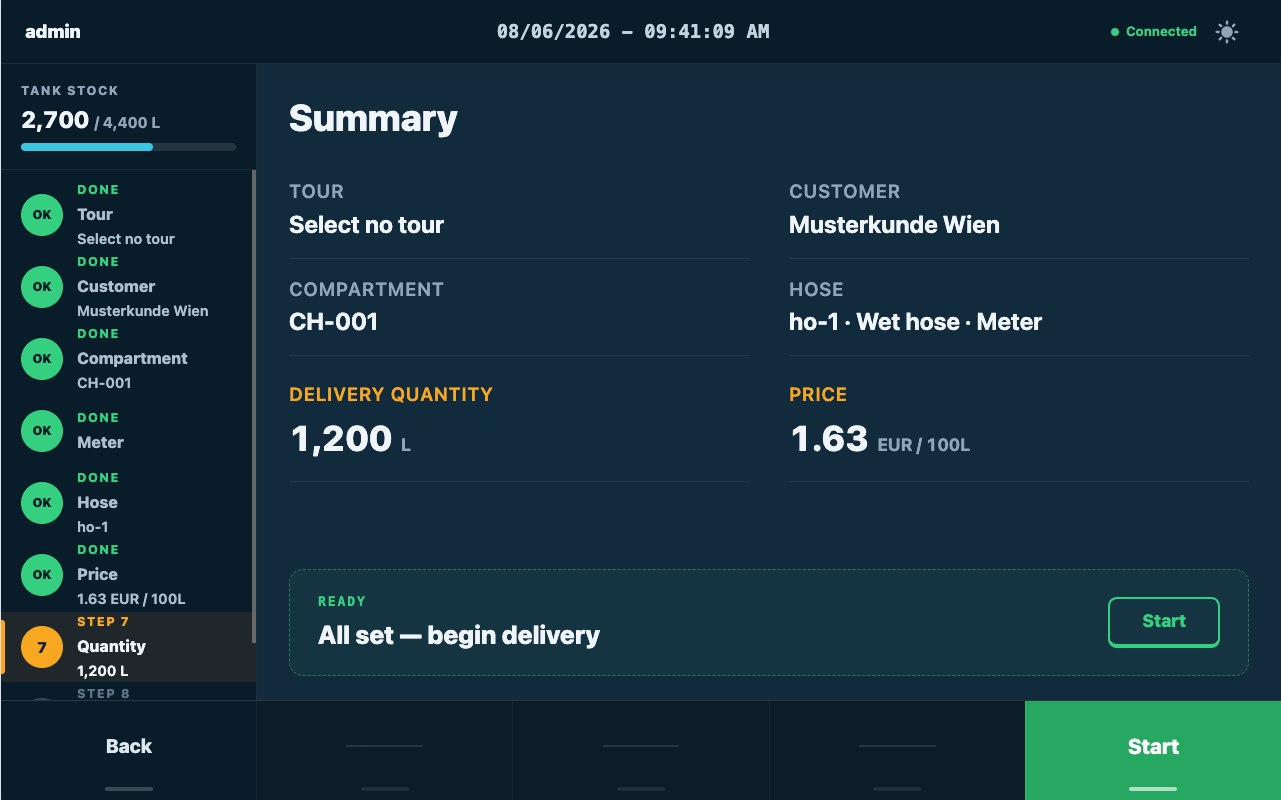
The Core Unit has a 10.1-inch full-colour display with 1280 × 800 pixels and 1,000 cd/m², anti-glare and hardened, and five RGB-lit keys sized for heavy gloves to MIL-STD-1472. Login is by NFC, RFID, biometrics or QR code; a camera provides the automatic day and night mode. The operator concept uses clear focus, unambiguous next actions and redundant presentation of critical information through combinations of colour, shape, position, text, light and sound.
Drivers find and understand the information they need for the next step.
At three in the morning, every control matters.
- designed for gloves, glare and night operation
- one active selection and one clear next step
- critical states not coded by colour alone
- local operation of key functions without permanent cloud dependency
- optional swivel arm for better access during operation and service
- a second Core Unit on the far side of the vehicle where needed
Connecting existing equipment
Integration starts with the equipment on your vehicle.
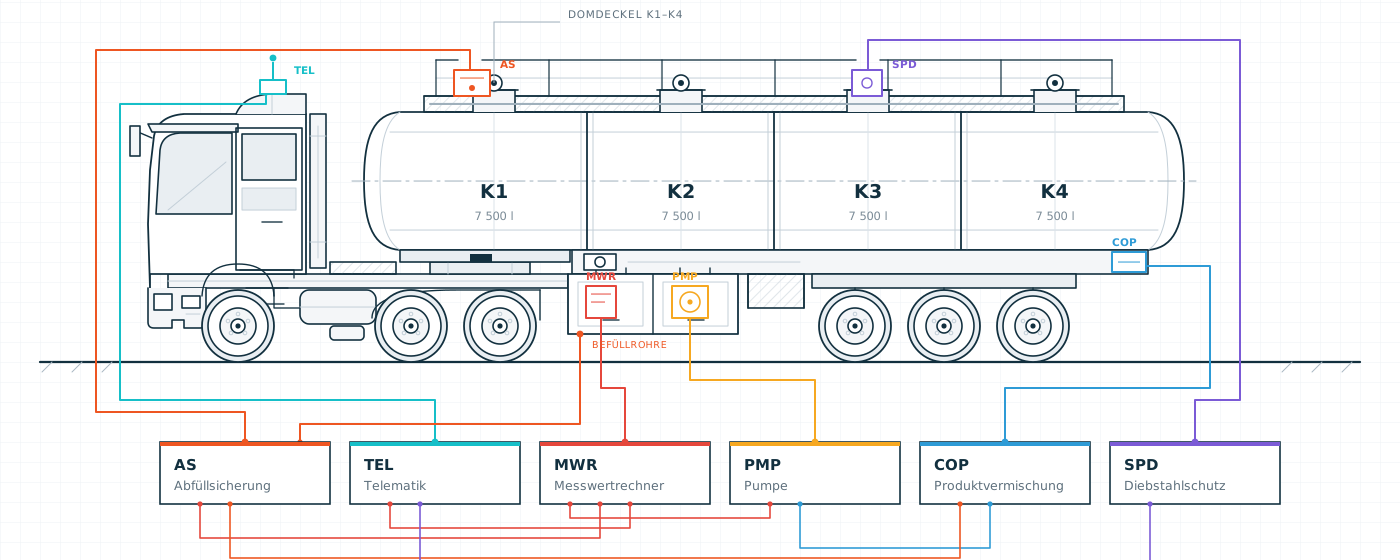
XPULSE is intended for new vehicles, retrofits and mixed installed bases. The platform can integrate supported meters, sensors, actuators and third-party systems.
The interfaces on the vehicle comprise CAN and CAN-FD, Modbus, RS485, RS232, CANopen and J1939, WLAN, Bluetooth, NFC/RFID and an open API. Flexible I/O separates the logical function from the exact field device.
Openness is not a promise of universal compatibility. Each combination is assessed for interfaces, electrical design, configuration and regulatory requirements.
One working day, three operating modes
From loading to the delivery record
1
Loading
Prepares the vehicle, checks relevant residual-product and interlock conditions and supports correct loading.
2
Planning
Presents the day’s tasks and relevant delivery information clearly.
3
Delivery
Guides and documents the delivery process, including relevant quantity, compartment, interlock and ticket information.
XPULSE combines metering information with vehicle, product, order and delivery context. Relevant process, status, operator and diagnostic events can be recorded for traceability.
For the core tasks of energy logistics
- tank-truck fleets
- heating-oil and fuel distribution
- service-station supply
- depots and terminals
The platform is designed for later expansion to other liquids that require metering, safety controls and delivery records.
The right configuration
Choose the configuration for your vehicle.
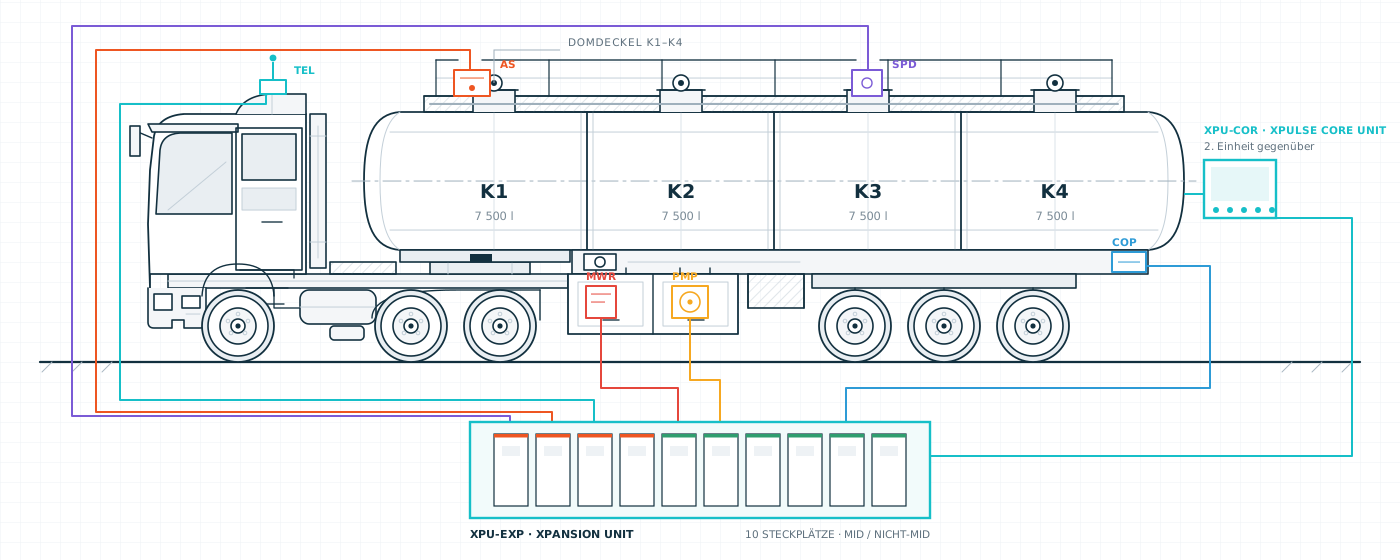
The architecture provides for three expansion stages. The right expansion stage depends on the vehicle, the task and the risk. What matters is which equipment remains in service and which functions are added. Once set up, configurations can be saved and loaded again.
Stage 1 · Core Unit only
The Core Unit as the operating and display unit, without an XPANSION Unit.
Typical: level measurement of a vehicle’s compartments, or the Ex operator unit for existing components such as COP and SPD.
Stage 2 · Core Unit plus XPANSION Unit
The standard modular configuration for tankers: one Core Unit, one XPANSION Unit, the modules the task needs.
Planned expansion: metering, COP, SPD, level measurement and cloud communication on one platform. Functions will be added in the sequence shown in the roadmap.
Stage 3 · Multi-XPANSION
Several XPANSION Units on one Core Unit, with a second Core Unit on the far side of the vehicle where needed.
Typical: very complex vehicles with many compartments, where more than ten modules are needed.
What stays the same in every stage
- One consistent interface
- The same Core Unit, the same software, the same five keys, from stage 1 to stage 3.
- One configuration
- Set up once, saved and reloadable at any time.
- One way to extend
- Add an XPANSION Unit, plug in a module, load the configuration.
We will work with you to define the configuration. Customer-specific extensions may be possible subject to feasibility, volume, safety analysis and any required certification.
Designed for regulated and connected operation
Security and conformity begin in the architecture.
Separate MAIN and MID domains, CAN-FD communication AES-128 encrypted. Secure boot, signed updates, TLS 1.3, role-based access and event logging are planned. The MID area can be sealed, and EX and non-EX areas are divided by partitions. The security approach is aligned with CRA and NIS2.
XPULSE
Roadmap
XPULSE starts as a metering computer and grows function by function, in this order.
1 · At launch
Metering computer for flow meters on tankers, designed for MID and Ex
2 · In the next step
Integration of wireless overfill protection
3 · After that
Legal-for-trade level monitoring with a dipstick system for tankers and stationary tanks, designed for MID and Ex
4 · Further expansion
COP system and SPD for tankers
5 · In preparation
Further modules: ValveBox with four or six channels, CAN-FD bus module, Modbus bus module, analog input module, analog output module, power-backup module, power-management unit
Planned sequence, subject to change.
XPULSE is in development. Units and modules are designed for ATEX and IECEx, Zone 1, and the MID modules are intended for EU type examination under MID. Specifications, dimensions and images show the current development state. Only documented approvals will be communicated.
How to get started with XPULSE
Three steps to the right configuration
- Tell us what you needVehicle, metering installation, sensors, retrofit needs.
- Choose the expansion stageStage 1, 2 or 3.
- Set the configurationOur team will help you specify the configuration.
Your task. The right configuration.
Talk to us about your metering system, vehicle or planned retrofit.
Discuss your technical requirementsPresented at ETX 2026
World premiere at Energy Transport Xchange, Messe Kassel, 17 to 19 September 2026.
Solutions Guide Sichere Kraftstofflogistik (Safe Fuel Logistics)
The Solutions Guide Sichere Kraftstofflogistik (Safe Fuel Logistics) (32 pages, German and English) explains the architecture, operator interface, integration and configuration options.
Open the Solutions Guide PDF (6.7 MB)FAQ
Questions and answers
What is XPULSE?
XPULSE is more than a metering computer. The modular system platform brings metering, safety functions, operation and communication on the vehicle together. The XPULSE Core Unit combines computing with the operator interface. XPANSION Units accept plug-in modules. The platform can be expanded in stages. Existing Secu-Tech safety systems continue to operate independently. Existing meters and sensors are integrated following technical and regulatory checks. XPULSE is designed for tanker fleets, heating-oil and fuel distribution, service-station deliveries, depots and terminals.
Is XPULSE generally available?
XPULSE is in development. Units and modules are designed for ATEX and IECEx, Zone 1, and the MID modules are intended for EU type examination under MID. Specifications, dimensions and images show the current development state. Only documented approvals will be communicated. How to get started with XPULSE: define the task and your need, choose the expansion stage, set the configuration together with Secu-Tech.
Is XPULSE MID- or ATEX-certified?
Units and modules are designed for ATEX and IECEx, Zone 1, and the MID modules are intended for EU type examination under MID. Only documented approvals will be communicated.
Can XPULSE integrate existing metering installations?
The platform is intended for supported existing metering installations and third-party systems. Compatibility depends on interfaces, electrical design, configuration and regulatory requirements.
Can the platform be extended later?
Yes. Modular expansion and updating are part of the architecture. Each specific extension remains subject to technical and regulatory review.
Is XPULSE suitable for retrofits?
XPULSE is intended for new vehicles, retrofits and mixed installed bases. The exact scope is determined for each vehicle and installation.
Can Secu-Tech develop customer-specific functions?
Customer-specific modules and integrations are possible in principle. They require an assessment of feasibility, volume, safety and, where applicable, certification.
Company
Secu-Tech in brief
- 5,000+
- service stations
- 500+
- tank trucks
- 500+
- loading arms
For more than twenty years, Secu-Tech has developed electronic systems for the safe handling, monitoring and documentation of liquids and gases in Leobersdorf, Austria. In service: tank-truck fleets, depots, service stations, stationary installations and other industrial environments. Secu-Tech is certified to ISO 9001 and ISO 14001 and has long-standing experience with ATEX and IECEx applications.
This project is funded by the FFG (www.ffg.at).
Questions about XPULSE?
Contact our team with questions about your vehicle, metering system or integration requirements.
Covering XPULSE for the press? Visit the press room
